
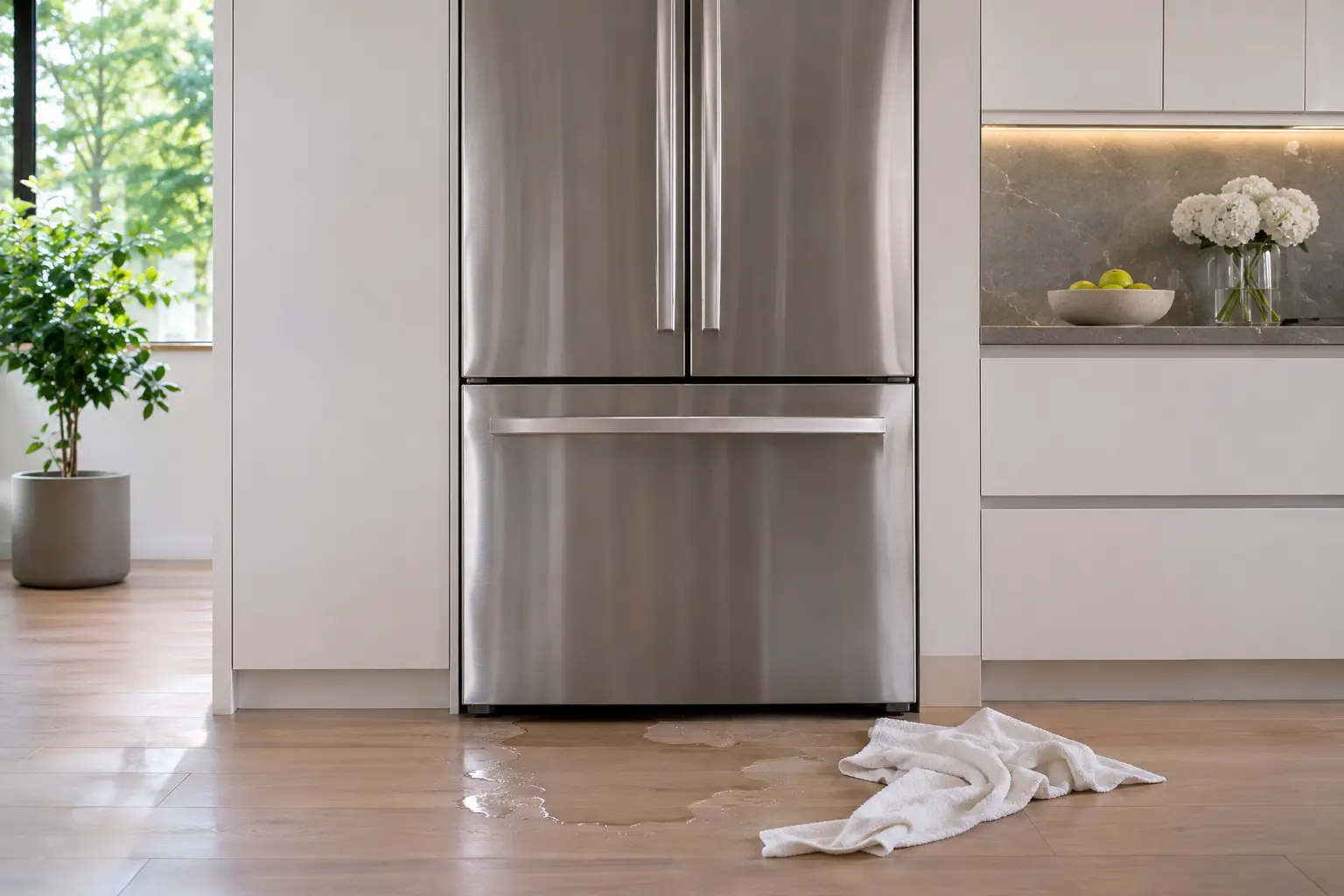
Finding a puddle by the fridge is never a great way to start the day. Maybe the floor is wet. Maybe there’s water pooling on a shelf inside. Either way, you’re probably asking the same thing: why is my refrigerator leaking water, and is it a quick fix or a real problem?
Here’s the good news. Most leaks come from a short list of causes. A few you can sort out in ten minutes, and a few need a technician. This guide helps you tell which is which.
Where the Water Shows Up Tells You a Lot
Before you start guessing, look at where the water is. The spot is a big clue, and it can save you a lot of time.
Water inside the fridge or on the shelves
Water inside the fridge or freezer usually points to a drainage problem. Every refrigerator has a small drain that carries melted frost out of the cabinet. When that drain clogs or freezes, the water has nowhere to go. It backs up and shows up as a puddle at the bottom of the compartment, under the crisper drawers, or running down the back wall.
Water pooling on the floor
A refrigerator leaking water onto the floor can come from a few places. If the puddle is at the front or under the unit, the defrost drain or the drain pan is a common suspect. If it’s near the back, think about the water line that feeds your ice maker or water dispenser. A puddle that keeps coming back deserves a closer look, because even a slow leak can damage your flooring before you notice it.
The Most Common Causes of a Leaking Refrigerator
Once you know where the water is, the list of suspects gets shorter. These are the usual causes behind a refrigerator leaking from the bottom, the back, or inside the cabinet:
- A clogged or frozen defrost drain. Food bits or ice block the small tube that carries melted frost away, so the water backs up and spills.
- A worn or dirty door seal. When the door doesn’t close tight, warm, humid air sneaks in. That moisture turns into frost and then drips as it melts.
- A loose or damaged water line. Fridges with an ice maker or water dispenser have a supply line. A loose fitting or a small crack can leak behind or under the unit.
- A failing water inlet valve. This valve lets water into the ice maker. When it wears out, it can drip or let too much water through.
- A cracked or shifted drain pan. The pan under the fridge catches defrost water. If it cracks or slides out of place, it can overflow onto the floor.
- A water filter that isn’t seated right. A filter that is loose, old, or cracked can leak near the dispenser or behind the grille.
A clogged defrost drain is one of the most common reasons homeowners find water inside the fridge. The tell is usually a sheet of ice on the back wall of the freezer, or a puddle that forms under the produce drawers. The drain can clog slowly, so the leak may seem to come out of nowhere.
Door seals are the sneaky one. A seal can look fine and still leak a little air. You won’t see a crack, but you might notice damp spots, frost near the door, or a fridge that seems to run all the time.
What You Can Safely Check Yourself
Start with the simple stuff. If you plan to move the fridge or reach behind it, unplug it first. Then run through these quick checks.
Look at the door seal. Wipe the rubber gasket with warm, soapy water to clear off crumbs and sticky spots. Then close the door on a sheet of paper. If the paper slides out with no resistance, the seal may not be gripping and could need replacing.
Check for ice buildup. Peek at the back wall of the freezer. A thick layer of frost or a patch of solid ice often means the defrost system isn’t draining the way it should.
Reseat the water filter. If your fridge has one, make sure it’s twisted fully into place. Your owner’s manual shows how it should lock in.
Make sure the fridge sits level. A unit that leans the wrong way can send water where it shouldn’t go, and it can keep the doors from closing tight. Your manual explains how to adjust the feet.
It’s also smart to keep an eye on the temperature while you sort this out. The USDA’s refrigerator food safety guidance says to keep your fridge at 40°F or below and to wipe up spills right away.
Just as important is what not to do. Don’t chip at ice with a knife or ice pick, and don’t point a heating device at it. The USDA warns that sharp tools and electric heaters can damage the inner lining of the unit. Also skip tugging on the water line behind the fridge, since a small leak can turn into a big one fast.
When to Call a Technician
Some leaks are worth a call right away. Reach out if the water keeps coming back after you’ve cleaned the seal and checked the filter. The same goes if you see ice that keeps forming, if the leak is near the back where the electrical parts are, or if the puddle is spreading across the floor.
Pay extra attention if the leak comes with a fridge that isn’t staying cold. The USDA says food held above 40°F for more than two hours should not be eaten, so a warm fridge isn’t something to wait on.
That’s where we come in. We book same-day and next-day visits across Fairfax and Northern Virginia. Our technician finds the actual fault first, then gives you a firm price before any work begins. If you’d rather not go ahead, that’s fine.
Call us at (571) 357-5201 or request service online and tell us what your fridge is doing. You can also read more about our refrigerator repair service to see how a visit works.